
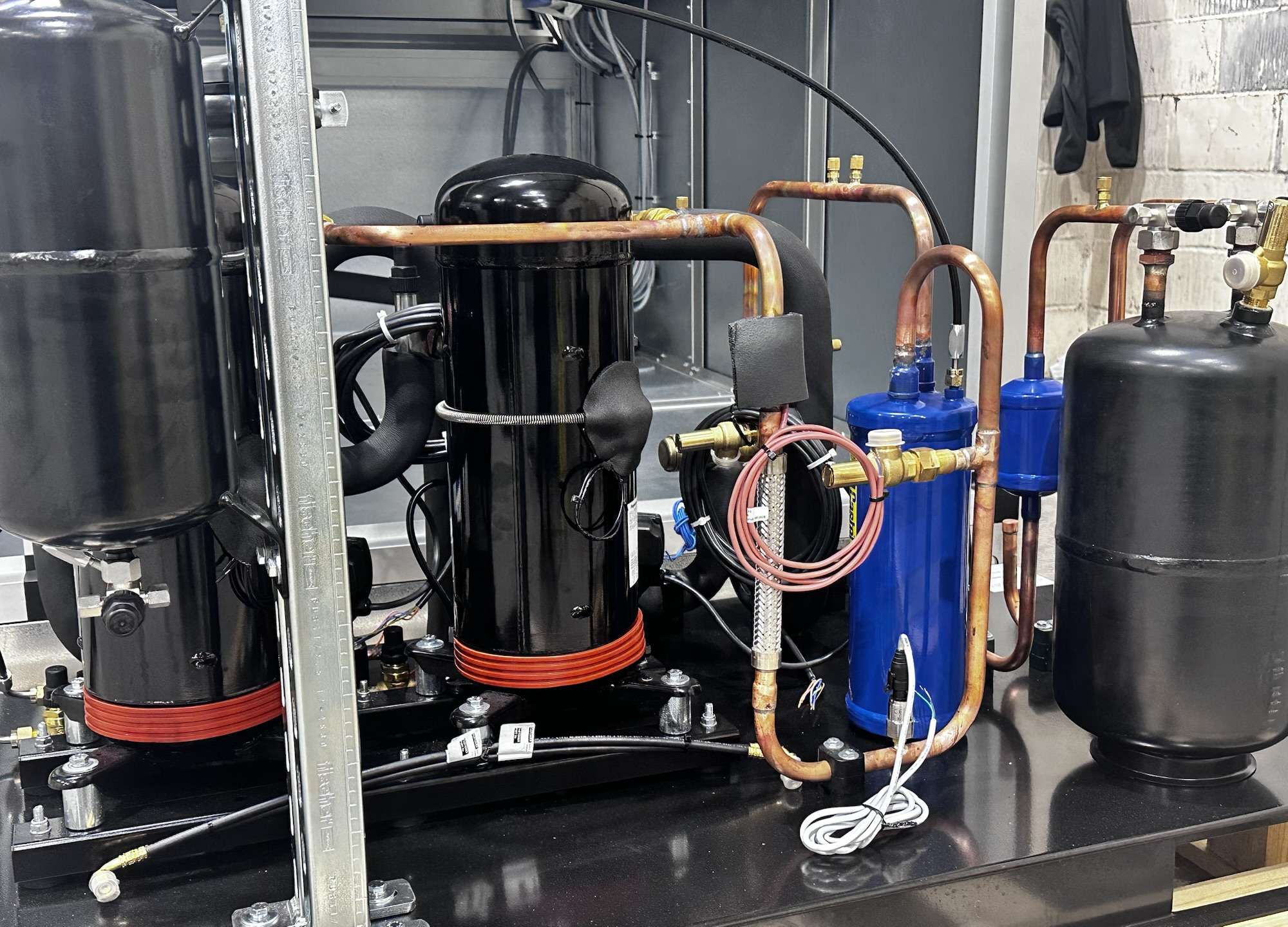
In modern air conditioning and refrigeration systems, the Direct Expansion (DX) cycle is one of the most widely adopted methods for cooling. Its efficiency, compact design, and flexibility make it suitable for applications ranging from small offices to large commercial buildings. Understanding how the DX cycle works is essential for HVAC designers, consultants, facility managers, and contractors, particularly when complying with ASHRAE, CIBSE, Eurovent, and F-Gas regulations. At Air Handlers Northern, we integrate DX technology into a range of AHUs and packaged solutions to deliver both efficiency and reliability.
What is the DX Cycle?
The Direct Expansion (DX) cycle is a refrigeration process in which the refrigerant directly absorbs heat from indoor air and rejects it outdoors, cooling the building in the process. Unlike chilled water systems, which rely on a secondary water loop, DX systems expand and evaporate the refrigerant directly in the evaporator coil of an Air Handling Unit (AHU) or Fan Coil Unit (FCU). This provides immediate cooling with fewer components and reduced system complexity.
Typical DX systems are applied in packaged rooftop units, VRF/VRV systems, split and multi-split units, and modular AHUs. These configurations allow engineers to balance energy efficiency (COP, EER, SEER) with capital cost, space constraints, and project requirements. Solutions from Air Handlers Northern often incorporate DX cooling within modular and bespoke AHUs, ensuring compliance with both performance and regulatory benchmarks.
Key Components of a DX System
A standard DX refrigeration cycle consists of four primary elements:
- Compressor – Increases the refrigerant pressure, circulating it through the system. Modern DX systems often use inverter-driven compressors to improve part-load efficiency.
- Condenser – Rejects absorbed heat into the ambient environment, either via air-cooled condensers (rooftop or external) or water-cooled condensers.
- Expansion Device (Electronic Expansion Valve – EXV) – Drops the refrigerant pressure and controls flow into the evaporator coil, optimizing performance in accordance with ASHRAE and Eurovent efficiency standards.
- Evaporator Coil – Typically a copper tube–aluminium fin coil located inside the AHU or FCU, where refrigerant absorbs heat from indoor air, reducing its temperature and humidity.
How the DX Cycle Works
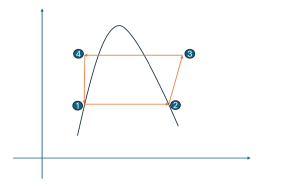
The DX cycle operates continuously in four stages:
- Compression (2→3) – Low-pressure refrigerant gas enters the compressor, where it is compressed into a high-pressure, high-temperature vapor.
- Condensation (3→4) – The refrigerant passes through the condenser coil. Heat is rejected to the outdoor air (or cooling tower water), and the refrigerant condenses into a high-pressure liquid.
- Expansion (4→1) – The refrigerant flows through an expansion valve, reducing pressure and temperature.
- Evaporation (1→2) – In the evaporator coil, indoor air is blown over the cold refrigerant coil. The refrigerant absorbs heat and evaporates, cooling and dehumidifying the air before it is supplied to the occupied space.
The cycle then repeats, ensuring a continuous supply of conditioned air.
Benefits of the DX Cycle
- Compact and Space-Efficient – DX systems require fewer components than chilled water systems, making them ideal for retrofits, small to medium buildings, and rooftop installations.
- Flexibility – Available in multiple configurations, from split units to Variable Refrigerant Flow (VRF/VRV) systems, DX solutions can be scaled for residential, commercial, or industrial applications.
- Energy Efficiency and Decarbonization – By using high-efficiency compressors, EC fans, electronic expansion valves, and low-GWP refrigerants (R513A & others), DX systems align with EU F-Gas regulations, ASHRAE 90.1, and CIBSE TM65. They reduce reliance on fossil-fuel-based heating and support net-zero building strategies.
- Lower Initial Cost – Compared to chilled water plants, DX systems offer a cost-effective solution with shorter installation times and reduced pipework.
Applications of DX Systems
DX technology is widely used across sectors:
- Commercial offices and retail spaces – Packaged rooftop units, VRF systems, and split DX.
- Residential buildings – Apartments, hotels, and student housing.
- Healthcare and laboratories – Where precise temperature and humidity control is essential.
- Data centers and IT rooms – For reliable, localized cooling.
- Supermarkets and food retail – Where cooling and dehumidification are critical for both comfort and product preservation.
Air Handlers Northern DX Solutions
You can find more information on how we integrate DX cycle technology into our products by exploring the AirADAPT Series, Envirofresh Series, Skid-Pak & Air-PRO Units from Air Handlers Northern. These solutions are engineered for efficiency, compliance, and reliability, making them ideal for both new builds and retrofit projects.